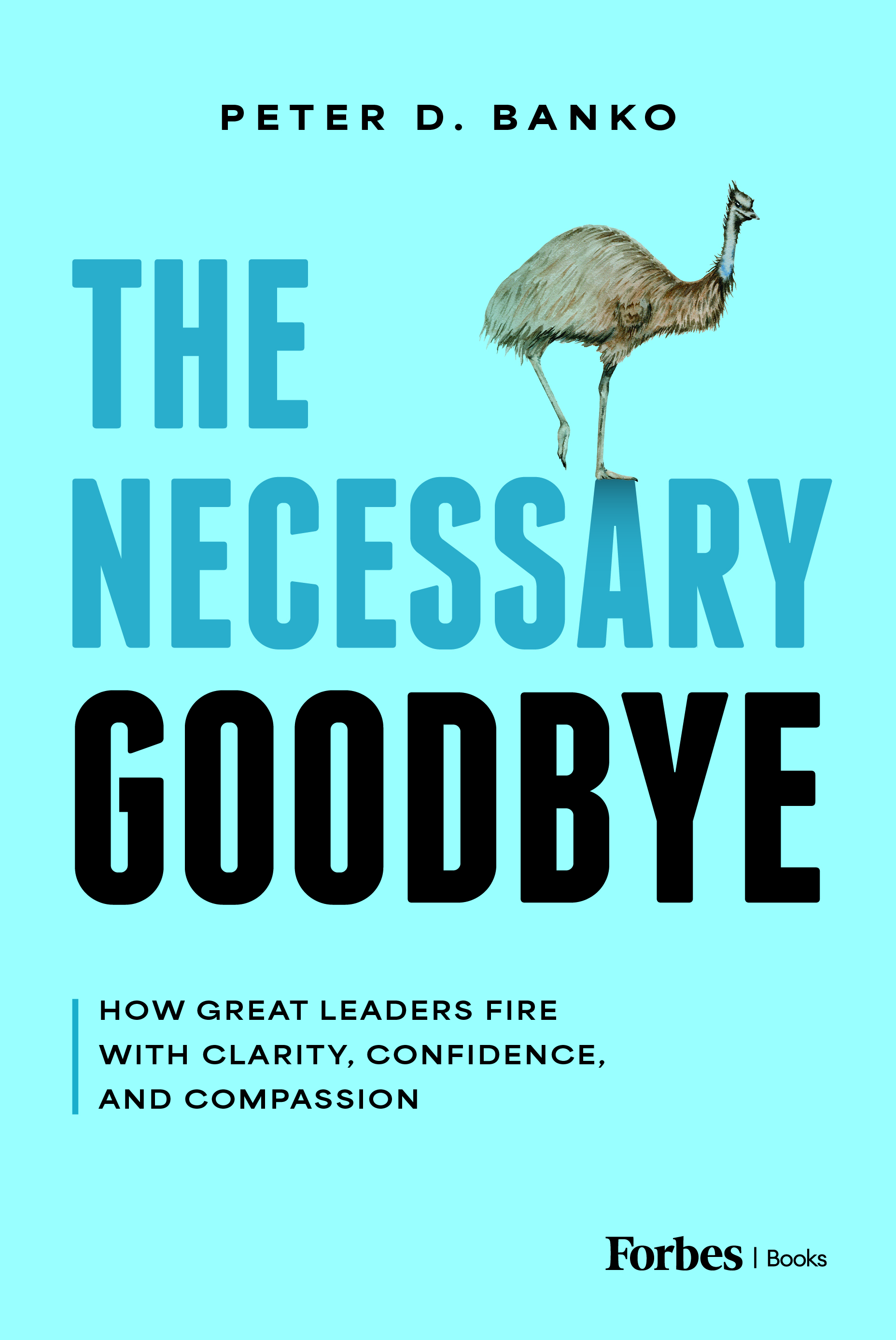
Peter D. Banko’s The Necessary Goodbye is a
candid leadership manual that reframes termination not as a managerial failure
but as an essential, albeit underutilized, tool for organizational health. The
author shares his experience that spans two decades as a CEO handling financial
turnaround, and argues that firing—whether termed “freeing up futures” or
“involuntary separation”—is often the most compassionate act a leader can
undertake. Yet, this experience can come with a sense of guilt for many
leaders. In this book, he teaches leaders how to be not only professional when
handling this aspect of business, but also how to do it with compassion and in
a way that benefits everyone. I enjoyed the author’s take on Carl Jung’s twelve
archetypes, from the substance-abusing Lover to the self-sabotaging Ruler,
which he uses to categorize problematic employees and tailor specific
strategies for their removal. Rather than offering sterile HR protocols, Banko
delivers a battle-tested guide for taking control of the messy human truths of
letting people go while preserving team morale and institutional integrity.
The Necessary Goodbye champions the idea that
“leadership is not a popularity contest” but a commitment to servant leadership
and active compassion. Banko distinguishes sharply between being “nice”
(avoidant, people-pleasing) and being “kind” (taking difficult action for the
greater good), noting that “clear is kind. Unclear is unkind.” His voice blends
CEO authority with genuine self-reflection, sharing cringeworthy personal
failures, such as mishandling a resignation that should have been a firing, alongside
hard-won successes. The voice is refreshingly direct, referencing everything
from Dante’s ninth circle of treachery to Taylor Swift’s “Anti-Hero,” while
maintaining clinical practicality in the advice it delivers. When Banko writes,
“When you know, you are done,” he captures the intuitive certainty required for
these decisions, comparing the finality of firing to the certainty of falling
in love. The archetype framework proves particularly effective, transforming
abstract “problem employees” into recognizable patterns—from the destructive
Martyr-Caregiver to the chaos-inducing Explorer—with specific, actionable exit
strategies. This is a book every leader should have on their shelf.






 Mommys_Boy_6x9.jpg)




.jpg)
































.jpg)


.jpg)





.jpg)






.jpg)
.jpg)









.jpg)





 (2).jpg)




.jpg)









.jpg)



.jpg)



.jpg)




















.jpeg)






.png)



 (1).jpg)



.jpg)






.jpg)