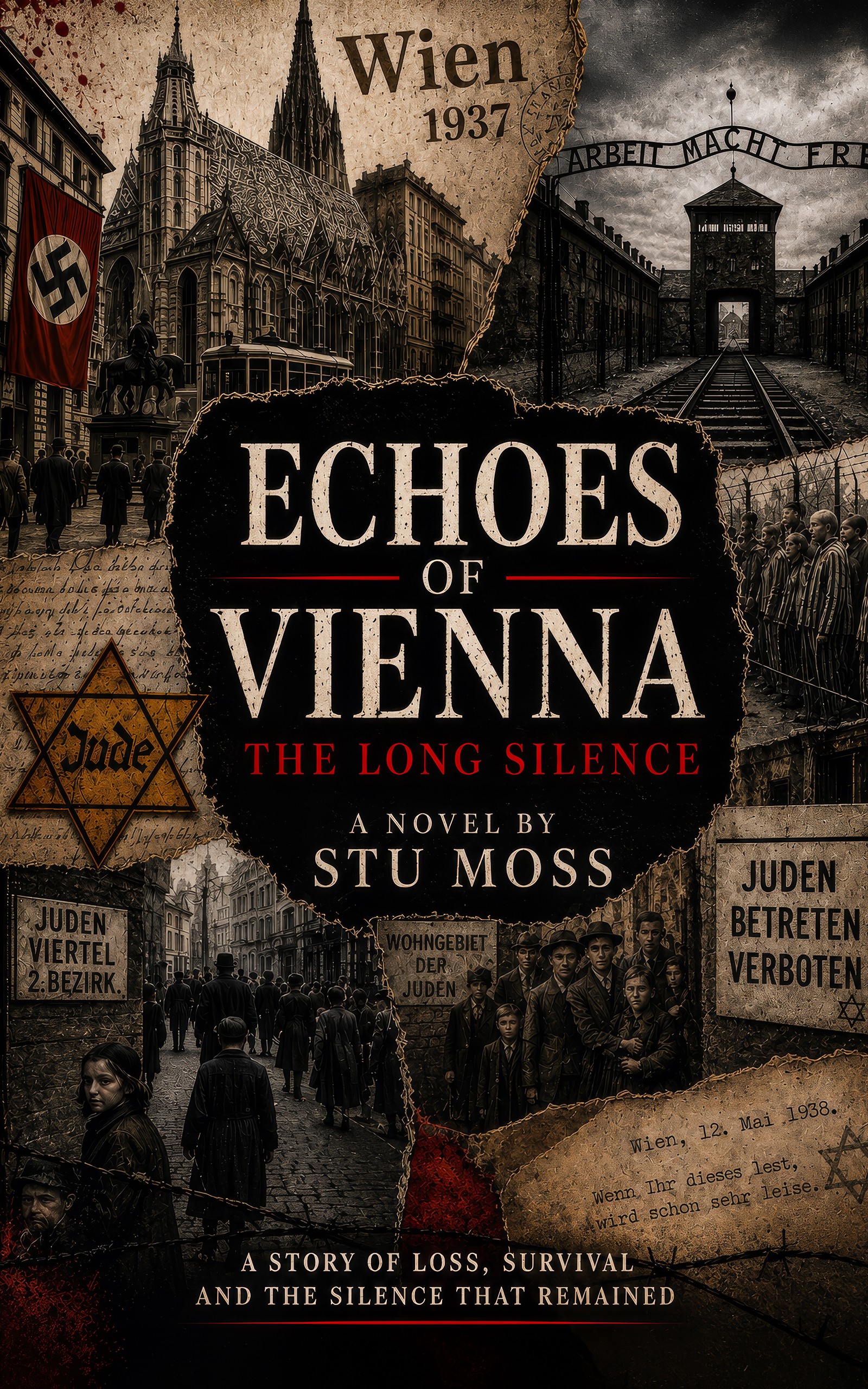
Stu Moss’ Echoes of Vienna: The Long Silence opens in
Vienna in 1937, where Dr. Samuel Schneiderman, his nurse wife Leah, their four
children, and grandparents Peter and Helga. The family shares Sabbath dinners
and small daily joys even as brownshirts begin marching past their window. From
there, the novel traces the family’s unraveling with devastating patience: the
Anschluss, Kristallnacht's shattered glass, fifteen-year-old Jacob’s desperate
escape to America with only a photo with him, and the family’s deportation to
the Lodz Ghetto, the horrors of Auschwitz, and a harrowing death march to
Mauthausen. This book tells the story of an ordinary family whose lives are upended
by one of the darkest chapters of human history. Some will endure unimaginable
struggle and starvation. Will this family survive and reconnect, and what will
Jacob discover when he returns to Vienna decades later?
What makes the book so gripping is how deeply we come to
love these people before history tears them apart. Samuel’s stubborn faith in
reason slowly crumbles, and it is heartbreaking; Leah's clear-eyed courage
anchors every scene; and Jacob—''the seed,” the son sent away to live—gives
the story the life it deserves. Moss structures the novel cleverly, alternating
Jacob's American soldiering with his family’s suffering in Europe, building
almost unbearable dramatic irony. The pathos draws you in and claws at the
edges of your heart, forcing you to stay with the heartbreaks, the pain, the
psychological strain of the inhuman treatment the characters receive. The
worldbuilding moves from candlelit dinners to the brutal arithmetic of bread in
the ghettos, and the pacing moves like history itself, with the slow-burning
dread in Vienna, then relentless momentum builds once deportations begin. The
prose is sparse, and the violence is never gratuitous—it devastates precisely
because the characters feel real. Themes of memory, witness, and survival fill
the pages of Echoes of Vienna, especially in the quiet image of two
photographs—one before, one after. A sincere, deeply moving tribute that
insists we never forget.


 Mommys_Boy_6x9.jpg)



.jpg)